Saturday, June 29, 2013

Kaffe, as in Safe

The Fashion and Textile Museum in London
London's Fashion & Textile Museum bustled on a rainy Friday afternoon, chock full of Kaffe Fassett aficionados. Anita blended well with the attendees. Like cruisers, they tend to run to a type: short-haired women of a certain age, wearing mostly natural fibers dotted here and there with splashes of color.

The exhibition was overwhelmingly colorful, like the documentaries of India showing ceremonies that involve pots of vivid dies. The walls were festooned with pillows, sweaters, paintings, fabrics and other monuments to a life devoted to exploring colors and how they change one another when brought together. Fascinating stuff, especially if you are a quilt, knit, crochet type.

A profusion of color by Kaffe Fassett
After an hour or so of textiles I found a semi-comfortable chair and settled in for an afternoon's nap. It being around 6 am in Atlanta and me still having one foot in eastern time made it easy to drift off. I had wondered whether to lug along the u-shaped neck pillow I had used on the flight from Atlanta. I decided I wouldn't need it and left it behind in Ghent. Big mistake.

When I awake the plan is to head off to the V&A for more texture, color and design. Anita is having a terrific time and I'm looking forward to more adventures in London, including a jaunt to the upper-end fabric mecca, Liberty of London. I suspect we will shed a few pounds there, for sure.

Brilliant is my new Briticism, learned in Liberty of London where Anita acquired pounds of lint in various colors and weaves at astounding prices. Even when I squinted at the numbers and pretended they were dollars rather than sterling it was impressive. After accumulating several royal purple LL bags we trekked to the VAT refund desk. A young woman coached us through the stamping of receipts and filling of forms. To each of our answers she responded, "Brilliant," which I gather means uh huh, but is so much more posh-sounding. Later we discovered she had neglected to tuck the VAT form in the LL envelope. Not so brilliant, that.
Liberty of London, yarn mecca.

Stalking the Mazurka

"I recognize the tune, but It doesn't sound like a mazurka." This devastating comment, emailed last spring by a friend in Belgium, sharply focused the purpose of this cruise. By the end of summer I hope to be able to play a recognizable mazurka and dance the same, to tunes by Naragonia, a duo who play exquisite diatonic accordion. All this in Ghent, Belgium.


Anita's on-board meal was different than mine.
This is our first cruise aboard a dirt yacht rather than Sweet Pea. As a result, our Atlantic crossing involved only a single overnight watch -- I suppose that I can claim watching movies aboard Delta is a watch and I did stay awake for the entire night. For various reasons -- mainly due to a shortage of SkyMiles, leading to only one "free" ticket -- Anita snoozed two rows ahead of me in decadent luxury while I suffered in Coach with a bag of peanuts.

We landed in Brussels, dizzy with time warp, and navigated trains to our flat in Ghent. The summer's cruise has started.


Now, having stowed our bags in Ghent, we're streaking east across France on the Eurostar, headed for London. This is to be Anita's treat: a museum crawl to satiate a textile itch. We'll start with Kaffe Fassett's exhibition of quilt and color in the Fashion and Textile Museum and then tube over to the Victoria and Albert Museum for a couple of days. Lotta tangled threads in my future.

Next week I hope to meet with my musical coaches -- why hire only one mazurka consultat when three are available? -- hear Naragonia in concert and play tunes with Anja, the Ghent friend who has been incredibly helpful in understanding how to do this cruise.

As the cruise guides always say, the prudent mariner seeks local knowledge. A year ago on melodeon.net I posed the question of where to study diato. That opened the door to a flood of advice, including a tip from Chris Ryall that a university town like Ghent would be ideal. Anja, a Ghent based melnetter chimed in with where to stay, how to get around the town and the country, which festivals to attend, and who might give music lessons.

We took a flat in Patersol, Ghent's charming old section, full of restaurants and bars on cobblestone streets that are mostly empty of cars, with a tram stop at the end of our street. I have lined up diato lessons with Guss, a recent graduate with a degree in music who wants to start giving accordion lessons and is an accomplished dancer. And, the biggest of the Belgium music festivals is held in Ghent. Without such good advice I would have already hit the shoals. Instead we're well underway and already having fun.

Friday, February 1, 2013

Community Carnitas

Last night was Sweet Pea's chance to sponsor a social event at the fire pit, which is Jekyll Harbor Marina's gathering place for the cruisers and comes complete with gas grill. We did Mexican slow-fried pork tacos also known as carnitas. Here's how.

For 20 people start with:
  • 5 lbs. pork shoulder (Boston Butt) or similar inexpensive cut of pork roast, the fattier the better.
  • Aluminum foil turkey roasting pan
  • Spices: cumin, cinnamon, chili power, oregano, rosemary, ground black pepper
  • 3 limes
  • 1 cup of any liquid: cola, orange juice, water
  • Vegetable oil or similar cooking oil
  • Flour tortillias
  • Taco garnishes, provided by guests: chopped cilantro, cheese, sour cream, avocado, salsa, lime wedges, radish slices, etc.
Prepare the pork:
  • Mix spices to form a rub, gauging quantities by eye and inclination.
  • Cut pork into chunks, approximately 2 - 3 inches in size.
  • Place pork chunks in aluminum foil pan and coat all surfaces with the spice mix.
  • Arrange the pork chunks around the side of the pan to create a small cavity in the center.
  • Squeeze in several limes and then add the rinds to the cavity.
  • Add 1 cup liquid -- I used Coca Cola since it was on hand and might even add a complex flavor but orange juice or water also works.
Cook the pork:
  • Place foil pan on gas grill or oven.
  • Add cooking oil to cover pork.
  • Roast at 250 to 300 degrees Fahrenheit for 2-3 hours until much of the water is evaporated.
Initially the liquid will simmer as the heat evaporates the water, holding the temperature to 212 degrees. Ideally this step will take about 2 hours, producing a fork-tender meat that is easily shredded but with a soft crust.

When the water is mostly evaporated there will be fewer steam bubbles -- the simmer will appear to slow down -- and as a result the temperature of the oil will begin to rise, crisping the pork. If this final step is extended too long, the meat will gradually become dry and tough, so monitor by periodically tasting to gauge the optimal balance between a succulent fall-apart tender interior and crispy outside. Use a beer or wine to refresh the palate between tastings, just to be sure.

Make the carnitas:
  • Remove the pork chunks and discard the oil. Use extreme caution when handling the hot oil.
  • Return pork to the pan and hold in the warm grill along with a stack of flour tortillas.
  • Shred pork prior to placing on a warm flour tortilla.
I like to set up an assembly station, using the open gas grill set to its lowest heat. Nestle the pork chunks in one end of the drained aluminum pan and put a heat-proof plate stacked with warm tortillas in the other end. Using a spatula and tongs, shred the pork in the center of the pan and place a generous serving on the top-most tortilla. With the spatula and tongs, fold the tortilla so that the person you are serving can lift it by the top edges, without touching the rest of the stack. Between servings close the grill to keep the ingredients warm.

Despite starting with a fatty cut of pork and simmering it in oil, the results are not greasy -- perhaps the marbling renders from the meat in the final step and is discarded with the oil. Squeezing a lime wedge over the carnita helps balance the pork's richness and adds an acid bite.


Monday, January 21, 2013

Chasing my Trail

Deaton Yacht Service in Oriental, NC, has declared Sweet Pea ready to go. That is good news for this cruise, which started last August and paused three months for engine work while winter's clock ticked away as Deaton proved themselves to be completely trustworthy. I must voice a special thanks to Eric Pittman and John Deaton for persisting in making things right.

Not too cold, not too windy, not too much current,
and not having nearly so bad a day as this
vessel near Lockwoods Folly, NC.
The forecast was for more than a week of light SW airs and warm temperatures. This January thaw sounded unlikely, but a gift is a gift. Still, this prudent mariner -- the guide books are always nattering on about how the prudent mariner seeks local advice, mistrusts any instrument, and is prepared for the seas suddenly parting -- lugged along full polar expedition gear, just to be sure. Ten-day weather forecasts, like the heartfelt advice I find myself giving to my offspring, may be completely wrong. Just ask them about that.


So, I left Oriental with high hopes for getting further south before the jet stream twisted back into its more typical wintry curves and pushed a bit of the arctic into the Carolinas. Except for one chill day when I looked like the Michelin man in my down parka and mittens, this mostly came true.


On this dash south to Jekyll Island, there was only one nasty surprise. The engine died suddenly on the approach to the fuel dock at Sea Gate Marina in North Carolina, leading to a bit of excitement as I crash landed into an empty slip. I heard lots of noise as I bulldozed a piling but Sweet Pea escaped without even a scratch on her nose, which makes me glad the slip was conveniently unoccupied. A bit of sleuthing showed the fuel tank's air vent was blocked, so for once I can't blame Mack Boring. Instead I blame whatever insect thought the vent would be a terrific place to settle down for a long nap.

Southport, NC, at one of many stops for fuel.
After that first surprise I looked for long landing spaces.
In the balmy breezes and optimism of last September I had wished for 20 day-sails to take me south in leisurely solitude. Forget day sails. My my new goal was to deliver Sweet Pea and myself to our destination in the least time and with the fewest mishaps. One lucky landing was enough for this trip.

This January's reality was completely different than poking along a smelling the salt marsh. For 11 days I hauled anchor at first light and motored at top speed all day, cheered by sometimes running with the current, rather than chugging relentlessly against the rushing tide. In a way it was like cruising under sail, sometimes you speed along and others you barely move, but with a lot more noise and frequent stops for fuel. 

Along the way I noticed a new line displayed on the chart plotter: a green-black dash. It forecast where I might turn and when I might blithely find myself driving across the chart's marshes and islands. It seemed to be beckoning me forward. After some puzzling I realized that I must have, on a previous cruise, saved the GPS breadcrumbs as a track, which was now displayed. The green-black was advice from my former self to guide me home. At first I thought how fortunate I was to have an experienced hand along. Someone to give an opinion about avoiding life's shoals.  It was the the local knowledge those guidebooks tout. 

The green-black advice was often bewilderingly wrong as was the GPS's chart.
Instead I created my own black and white reality.
However, after watching my previous track unfold over the last ten days, I understand why my offspring roll their eyes when I proffer advice based on experience. I found myself deviating from the saved track for all the right reasons. If in the past I had run this section at high tide I could hardly count on staying afloat in the same place at low tide. In the intervening years shoals had developed or vanished, navigational marks had moved. A diversion from the waterway to a snug anchorage might have made sense at the previous trip's sundown but was only a distraction at today's noon. 

Plus, the GPS condensed the breadcrumbs prior to saving them, eliminating small details like a last-minute swerve to miss a marker. Its electronic memory summarized the previous experience, reinterpreted it and then tried to tell me what to do. I wince at any similarities with my own brood.

In the end I viewed my strident previous opinions about how to proceed as a green-black bruise that might have been based on hard-earned experience, but really didn't apply to me in my situation. In a similar way, I think I'll bite my tongue the next time I'm inclined to give my grandson the benefit of my mind. Instead I'll be more careful to ask him what he thinks I might do to help in his situations.

The new view from Sweet Pea's back porch at Jekyll Island, GA.
Now Sweet Pea has once again become a seaside cottage at one of our favorite places on this planet. It is strange to drop back into the Jekyll Island Harbor community, see dear friends, and feel how quickly the years we were away have faded to memories. 

It was a grand two-year cruise even though it ended in an unexpected sprint for the finish line. By the law of all averages I should have frozen. Instead I marveled at the fortune of being underway and the enticing prospect of someday doing it again, but next time with a shorter call on Oriental.


Friday, November 16, 2012

That Was Fun

Sweet Pea settles in to her new home.
I'm headed south for the holidays. No surprises there. It is the pact Anita and I keep. We will cruise. I will single-hand at times. I will be there for the holidays, no matter what. Oh, honey, I'm home.

Sweet Pea, in contrast, will be lingering in Oriental, NC, for a while. How long? Ah, isn't that always the question in life and in cruising?

I had expected that remedying the misaligned bearing, adding unworn parts heroically delivered from New Jersey by UPS and adjusting a screw here or there would lead to the finale in this Yanmar melodrama. I fully intended to give Deaton Yacht Service a standing ovation as I pulled out of the slip.

How naive. How undramatic. I should have realized that the first act included at least two smoking guns. The principle of Chekhov's gun applies and the curtain has risen on yet another act. This perplexing saga is turning out to have more episodes than a telenovela.

Strong performance by Eric.
Yanmar, not so much.
First, I must give full credit to Eric Pittman, who is stellar in the role of diesel mechanic. He heroically wrested a gun out of the villain's hand. That misaligned bearing that appeared in an earlier scene, standing too proud and misleading the governor into wrongly killing the idle revolutionaries? Totally not a problem anymore. The engine now purrs like a kitten at 850 rpm, roars like lion at full throttle and sounds ready to go.

If only. Unfortunately, it puffs black smoke on acceleration. Goose the throttle and it spits gobs of soot, as if someone had tucked a hearty pinch of snuff up inside the exhaust elbow. This second smoking gun appears to be the injection pump, which has twice been rebuilt by Mack Boring.

Now that everything else is exactly right -- new parts, new adjustments, new focus -- senior support technicians, including Mack Boring's own, opine that the pump is delivering too big a gulp of diesel, though now at exactly the right moment and with the correct pressure. Prior to now, it had been anyone's guess as to what might be happening since so many other things were wrong.

This big gulp could explain the thick black mustache -- it is much darker than her sisters; they all sport a shadow above the lip -- the carbon buildup inside cylinders, leading to too much compression, the coked up exhaust elbow and the choking sooty clouds I've left behind when I panicked the throttle. Once at Samson Cay in the Bahamas I glanced back after gunning away from the dock against a stiff current. Onlookers were fleeing what appeared to be a volcanic eruption enveloping the shore.

John Deaton and Eric want to pursue this until it is explained and fixed. They are appalled at the situation and want to make it right. I agree with their goal. Why rush off, only to limp from boatyard to boatyard with severe engine indigestion?

The schedule is uncertain as the players sort out who does what and as importantly who picks up the check for this entertainment. My cruise is on hold. I have failed in my mission to stay ahead of the frost line. Burr.

But, oh yeah, Jay Ungar's tune Fiddler's Elbow? I have had lots of time to work on that one. After hours and hours of goosing its throttle I can now move along at 150 bpm. My fingers smoke as they dance across the buttons. No cause for concern.


Tuesday, November 6, 2012

More than the Sniffles

Yanmar, off for a brief visit to the doctor
I keep telling myself that the cruise is what actually happens rather than what I want to have happen. There I was, heading south and thinking of Jekyll Island. My main concern was whether I would get an interesting collection of day sails along the way. Instead I got to stay put in Oriental, NC, for the last month.

Ron and Jayne, who have a house in Oriental, have been incredible, stopping by to chat and commiserate, driving me here and there, sharing eat outs, inviting me over for bottles of wine and dinners, providing a personal laundromat. Cruising really is about the people. I met them in the Bahamas long ago when we first ventured across the Gulf Stream and have treasured thirty years of their kindness and friendship.

I never imagined that inquiring into my rebuilt Yanmar's oil leaks would tie me to Deaton's dock for this long. Black snot dripping from its nose turned out to be the least of its problems. This has become a bit like going to the doctor with the sniffles and ending up on the operating table, getting a heart transplant.

John Deaton said that they would make things right. They haven't flinched. Eric has relentlessly pursued various mysteries while the engine sheds more and more parts. They are determined to make sure that we leave here actually cured.

An early puzzle had to do with incorrect settings for the governor and timing of the diesel injection pump. Eric adjusted those to factory spec, replaced several parts, fixed the the oil sniffles and fired her up. It ran perfectly.


Well, almost perfectly. At idle it would eventually lug and die. How disappointing. Eric had seen this once before in a six-month chase to nail down a problem with a different Yanmar. He knew where to look. Off came pumps, flywheels and housings to reveal gears and shafts that are normally quite private.

And there, hidden away, was the smoking gun. Sometime in the past the bearing that supports the front of the crankshaft was pressed into its housing with a bit less than the required vigor. It stands about a millimeter proud of where it should be and doesn't quite align with the surface that holds the governor assembly. The governor arm has been doing a mad dance as its forked fingers followed that misaligned bearing's sleeve.

Ah, those incorrect settings for the governor and timing of the diesel injection pump? I now believe that they were a maladjustment to compensate for symptoms caused by the underlying mistake of that proud bearing. This could account for all sorts of problems in governance, or whatever one might call the nuances of feeding exactly the right amount of fuel into the beast’s maw at precisely the moment to make things happen.

The tolerances are tight. Uneven wear on the tips of the governor fork's fingers meant being intolerably out of specification. Even more serious problems would eventually occur. Sort of like acid reflux I suppose, painful and ominous.

Having found this, we're now on hold for parts. The replacement comes from New Jersey. In the end, hurricane Sandy is affecting me, too, though I understand that this delay is absolutely nothing compared to Sandy's real effects.

Although the schedule is uncertain, I have hope. Perhaps the clouds of black smoke that have followed me around will finally be behind me. The Yanmar will purr with pleasure. The engine sump will stay pristine. Sweet Pea will once again leave a wake as the scenery slides past.
Fiddler's Elbow
Meanwhile, when I'm not hanging out with Ron and Jayne, my cruise consists of chasing Jay Ungar. Jay is a prolific composer, well known for writing Ashokan Farewell, a lament that Ken Burns used as the theme tune in his 1990 documentary The Civil War.

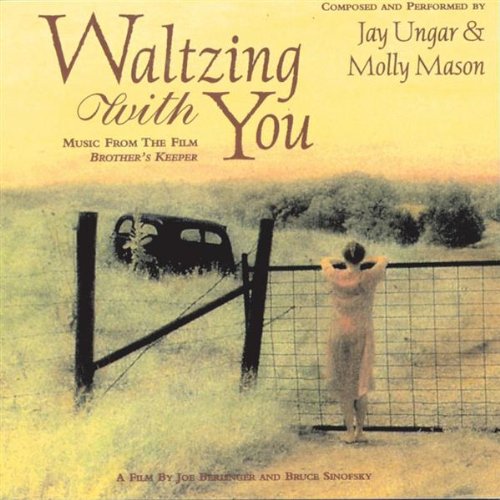
On Jay and Molly's album Waltzing with You, they play Fiddler's Elbow at a brisk 150 bpm. Alas, on this tune my melodeon's governor is still topping out at a sluggish 130.

Perhaps I should ask Eric to look at my fingers for signs of wear after a thousand or so practice runs. Nah, I don't want to be the one that's on hold for parts.


Wednesday, October 10, 2012

Customer Care

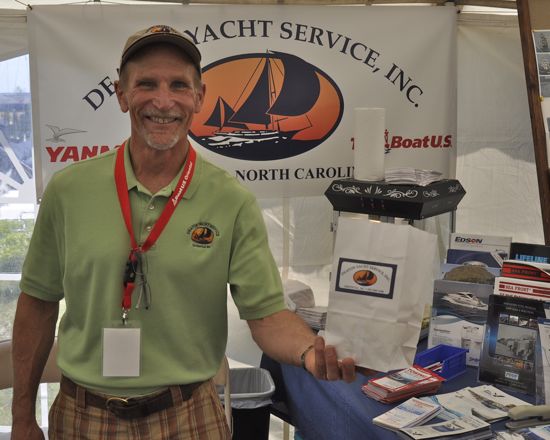
John Deaton cares about customers.
"From a customer's point of view, thanks for making the right decision." I was relieved to be able to say this to John Deaton, the owner of Deaton Yacht Service in Oriental, NC. He had agreed to yank my malingering engine and fix its lingering problems.

He astutely pointed out that it was the right decision from his point of view, not just from the customer's. If I wasn't happy with the outcome of their service, Deaton would make it right. That's the sort of company they are.

Whew. There for a while I was afraid this would turn into a meeting of the checkbooks rather than of the minds. I was already rehearsing scathing rejoinders to hurl as I stalked out. But then suddenly I was totally disarmed. Customer care can do that.

Over the past three years I have called at Deaton Yacht Service twice. Each time with the same problems: oil leaks and hard start. This after paying Deaton once to have them fixed.

Back in November '09 I was headed south and found oil in the antifreeze. I wanted a fix pronto so I could reach the Bahamas before the frost reached me. Deaton counseled that their own mechanics were fully scheduled, so they would subcontract the rebuild to Mack Boring, which is a name familiar to Yanmar owners. Before long my Yanmar was yanked like a bad molar, leaving an empty sump while it traveled to New Jersey for rejuvenation. It came back looking ready to go.

The dribbled results of an unacceptable rebuild
As soon as sea trials ended, I took off. I did make it to the Bahamas but arrived with a growing sense of dismay. Along the way and then as I cruised from the Bahamas to Cape Cod, there have been a series of unfortunate discoveries about the quality of that engine rebuild.

Fixing Aboard includes the gory details of how our trusted Yanmar turned on us to become a dreaded zombie that stalked as we fled from boatyard to boatyard.

Had I stuck around for a year I am certain that Deaton would have responded to my series of unfortunate events with alacrity, but I didn't give them the chance. Sweet Pea's home port is most anywhere warm enough or cool enough, depending on the season. I heard that the '09 winter was particularly brutal and included, of all things, a blizzard in New Orleans, giving new meaning to the phrase "when hell freezes over." The Bahamas saw nary a snowflake.

Sweet Pea slipped at Deaton Yacht Service, again
Now, three years and 750 engine hours after that rebuild, warranty wasn't in question. Mack Boring's warranty against leaks is an astonishingly short thirty days, so no warranty to worry about: zilch, nyet, nada.

Besides, warranties only function to limit liability. In contrast, customer care is a much more strategic marketing game, played over a much longer time. I wanted to know whether Deaton Yacht Service cared.

There was no way I was going to pay Deaton twice for one fix. I wanted to know what John Deaton would decide to do if Mack Boring (Deaton's subcontractor) denied any responsibility for making it right. Would he decide to make me whole or leave me broken? Forget the distraction of Mack Boring's response. I wanted his answer now, on the spot.

Having already invested in this gold standard,
I should be cruising rather than tied to the dock.
In my mind, two questions apply to any boatyard's service. First, did they do it right? Second, did they do it right if they didn't do it right, first?

Here I'm using "they" to include the boatyard's employees, subcontractors, suppliers and anyone else invited to the game. But for me, my they is the owner, the general contractor who sits at the top of a pyramid of other "theys."

Complex projects always involve surprises. While it is tempting to believe that the answer to the first question should always be "yes, they fixed it right, the first time", my experience is that it is sometimes "no, not really" even though the most highly qualified resources tackled the job using the best parts available. Stuff happens even to professionals. Projects include risk, unanticipated outcomes that can't always be known in advance. I know that.

Eric, tracking the zombie
From Deaton Yacht Service, I now have a partial answer to the second question. They intend to do it right the second time, by doing it themselves. They have re-assigned their most highly-qualified resource from his normal role as service manager to that of ace zombie hunter.

Eric has already found some underlying contributors to the hard start, having to do with incorrect governor and injection timing settings. I'm impressed by his methodical approach to diagnosing the problems and have a growing confidence in this second fix.

Eric does things by the book. What a refreshing change.
This next winter in the Bahamas I'm sure that I will be asked whether I would recommend Deaton Yacht Service.

I will think of John's answer in yesterday's meeting and my response will be, "Sure. I'd recommend them without reservations, especially if you are a cruiser on the go and may not be back in thirty days. They took care of me." Can't say better than that.